Artifacts and Amnesia: Lessons from the Four Corners
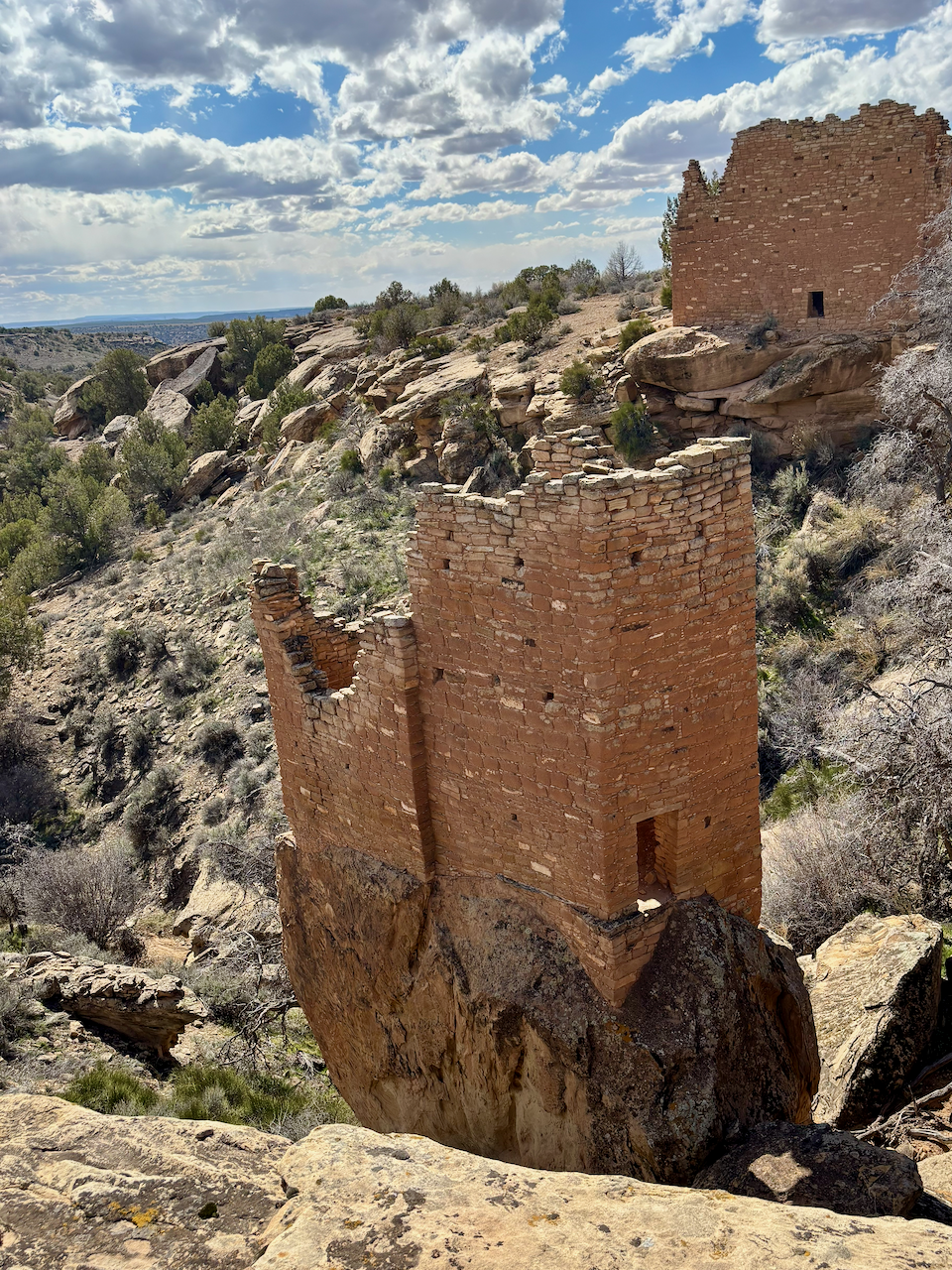
Today I’m going to talk about a concept I learned last year that is one of those general principles that applies to a lot of scientific fields. You may already know all about it, but it was new to me. It’s called shifting baselines. I was watching a webinar presented by Shannon Cowell and Anastasia Walhovd called “Save History: How to Protect Archaeological Sites from Looting and Vandalism”. The presentation was about a project between Archaeology Southwest, the federal government, and interested tribes to try to prevent vandalism of archaeological sites on tribal lands. Here’s the website: https://savehistory.org. This complements the Bears Ears Partnership’s Visit With Respect program, which works to do the same on public (not tribal) lands.
I can’t remember what exact thing she was talking about, but Shannon had a slide that mentioned shifting baselines and then she explained it a little. It’s easiest to understand with an example. Here’s one that Shannon used, from a fisheries scientist named Daniel Pauly.
Pauly developed the concept in reference to fisheries management where fisheries scientists sometimes fail to identify the correct “baseline” population size (e.g. how abundant a fish species population was before human exploitation) and thus, wind up working with a shifted baseline. He describes the way that radically depleted fisheries were evaluated by experts who used the state of the fishery at the start of their careers as the baseline, rather than the fishery in its untouched natural state. Areas that swarmed with a particular species hundreds of years ago, may have experienced long term decline, but it is the level of decades previously that is considered the appropriate reference point for current populations. In this way large declines in ecosystems or species over long periods of time were, and are, masked. There is a loss of perception of change that occurs when each generation redefines what is “natural”.
(That’s from the Wikipedia article)
Anyhow, after thinking about it a little, I realized that my interest in the history of archeology lines up with the shifting baseline idea. You see, one of the things I love to read is books and articles from the earliest days of archaeology in the Four Corners area of the US. I’d learned a lot about the early cowboy “archaeologist” pothunters, like the Wetherill family, and I’ve visited many of the sites they excavated 140 years before me. Comparing what they described in the 1880s to what I see right before my eyes, it’s easy to realize how much of a change there’s been.
In the 1880s, when the proto-archaeologists were first exploring cliff dwellings such as at Mesa Verde and Bears Ears, artifacts were everywhere. They could just peek into an alcove and see complete pots and tools and sandals and so on. These artifacts had been left there 600 to 1200 years earlier and were now seen undisturbed everywhere. The pothunters would dig down and find all kinds of stuff buried, and then dig down deeper and find even more stuff buried.
Nowadays, in 2026, when you go hiking to similar places, you might spot a dozen broken sherds of pottery in a day. And they’re somewhere between the size of a guitar pick and a playing card - nothing is complete because all the complete pieces were removed over the past 140 years. So what happened?
Well, read about the post-pioneer history of white folks in southeast Utah throughout the 20th century. For most of that time, it was common and socially acceptable for families to go off into the backcountry for a pothunting party. Pack a few sandwiches and some shovels, and maybe you’ll come back with a nearly-intact pot for the fireplace mantle. It took a little bit more work than the pothunters of the 1880s. But there were still enough artifacts just lying around that you could come home with something nice every time.
So I sometimes think about what it was like in these three different times. If you’d asked in the 1880s how many Ancestral Puebloan artifacts there are for “easy picking” in the Cedar Mesa area someone might say there were a few hundred thousand, and it’s way harder to transport them home than it is to find them in the first place. Ask the question in 1950, and someone would say, “Well, maybe a thousand, and I know where the best 10 or 20 are.” Ask the question in 2026, and someone would say, “They’ve all been taken. It’s extremely rare for someone to discover a new intact artifact.”
But then I was reading one particular book on the history of excavations in the Bears Ears area. There was an archaeologist around 1910 who was planning an expedition to go dig up and research some ancient sites. He talked to one of his fellow archaeologists who advised him not to go to Bears Ears because “all” the ancient sites had already been dug out. This was only 20 years after people started taking things. It was funny to think about how this person thought everything good had been taken by 1910. And yet there were still enough artifacts in the region that local families were having pothunting parties for another century until the government began seriously prosecuting these activities (Operation Cerberus Action in 2009).
I imagine a grandfather telling his grandkids, “Back when I was your age, pothunting wasn’t like it is now. We could go up any of these canyons and just find a dozen things worth taking home.” And then 45 years later, that grandson tells his own grandson the same thing.
Hopefully ARPA (Archaeological Resources Protection Act of 1979) and the Save History program and changing social mores have improved things so the shifting baselines stop there. Hopefully the second grandson has more wholesome hobbies. It would be great if he grows up to teach his own grandsons to simply revel in seeing what artifacts remain - appreciate them without touching them, so they’ll still be there for future grandsons to rediscover.